Showing posts with label english blogs. Show all posts

Sunday, May 6, 2012

Making Tteokpokki from Scratch

Here are some ingredient recipes if you would like to make tteokpokki from scratch:


The simplest recipe for making tteokbokki tteok from scratch
If you prefer sleek cylinders, you may shape your dough using cannoli 
or other tube molds and cut the dough to your desired length. 

Anchovy-Dashima Stock via cHow Divine

For flat fish cakes, you may try slightly baking or frying the mixture after rolling it into a flat sheet to get a solid texture before cooking in tteokpokki sauce. 


Here are some additional recipes for making tteokbokki:


Two chefs present Goongjoong (Royal Court) and Spicy Tteokpokki 

with a little background information about tteok and the dishes presented
The Goongjoong Tteokpokki has beef, eggs, and assorted vegetables.
The spicy version has boiled eggs and fish cakes.


Kochujang Tteokpokki with Fish Cakes via KFoodAddict (written recipe)
Adding cheese for a fusion option


For more tteokpokki recipes and a background on the dish, you may refer to the post Tteokpokki (Revised May 8, 2012).

Posted by tastingkorea

Thursday, March 29, 2012

Tteokpokki

Tteokpokki (떡볶이) refers to little rice cakes sauteed in a kochujang (red pepper paste) or soy sauce-based sauce, or other kinds like seafood, jahpchae, beef, or fusion sauces like curry, cheese, jjajang (자장, black bean sauce), etc. The rice cakes, called 떡 ('tteok') in Korean, are shaped in the form of little cylinders the size of one's index finger, tteokpokki tteok, or much bigger in the form of jumbo rolls with the diameter of a quarter, garaetteok (가래떡). They can also take the form of ovalettes a few mm in thickness, tteokguek tteok, but this is not a traditional ingredient for tteokbokki. '볶이' means 'sautee' and thus tteokpokki refers to 'sauteed rice cakes'.


Topokki JJang 
an iPad app that features 
32 tteokpokki recipes


More tteokpokki recipes from Topokki Research Institute


An excellent overview of several basic types of tteokpokki


Tteokpokki originated from the Korean royal court where it was referred to as '떡찜' ('Steamed Tteok'), '떡잡채' ('Tteok Jahpchae', sauteed tteok with assorted vegetables and beef), '떡전골' ('Tteok Jeongol', tteok hotpot), etc. (Assorted faculty and students from the Traditional Food Culture Dept. of Sookmyung University and its Korean Food Research Center). The royal version of tteokpokki, which we now know as 'Goongjoong Tteokpokki', was a special treat for royals. According to Sookmyung University, one version was made of white tteok, rib meat (sirloin), sesame oil, soy sauce, green onions, etc. according to the late 18th century cookbook 시의전서 (Nate 백과사전). Goongjoong Tteokpokki was the original form of tteokpokki as well as the first version of 간장 떡볶이 ('Gahnjang Tteokpokki', Soy Sauce Tteokpokki). 

The name '떡볶이' ('tteokpokki') was first featured in print in the 1942 cookbook "조선요리제법" ('Joseon Cooking Methods') (Sookmyung). The modern version of tteokpokki was established sometime after 1950 with Kochujang Tteokpokki (고추장 떡볶이) ("길거리 음식의 140억 투입 . . . 한식 세계화의 첨병으로", JoongAng Sunday, Suh Kyung-Ho). The exact timeline for the popular transition from soy sauce to kochujang tteokpokki is not clear, but this was the time when tteokpokki became a mainstream dish from the exclusive treat that it once was for the aristocrats and royalty (Suh). The noble class did not prepare tteokpokki in such a spicy manner, but used soy sauce as a flavor base. The introduction of kochujang was an adaptation made when tteokpokki became a mainstream dish. 

For a more extensive summary of how tteokpokki evolved, you may refer to the sources cited as well as these articles:


an excellent introduction to the history of tteokpokki 


A Brief Timeline of How Tteokpokki Evolved via Topokki Research Institute


The really cheap version of tteokpokki is made up of just sauce and rice cakes. But more standard variations include vegetables, beef, boiled eggs, fishcakes, and/or seafood. Ramen noodles may also be added as an additional treat, turning it into rappokki (라볶이). The key to making delicious tteokpokki is to use cakes that are freshly made of 100% rice in addition to using a delicious broth to flavor the sauce. Cakes that contain white flour do not taste as fresh or light as pure rice cakes. I prefer using ovalettes when rice cakes are called for in a recipe as they are thinner and lighter than the more commonly used cylinders. If you are marinading or thawing rice cakes, do not soak them too long or they will get too soft. I prefer to get the most most flavor per piece so use thinner versions of tteokpokki tteok. I add a seaweed and anchovy broth made of dashima (thick and flat dried kelp) to my tteokpokki sauce to give it a more savory flavor in addition to the carrots, squash, and beef that I use. Other broths may include seafood, beef, and/or vegetables, depending on the version of tteokpokki one is making. I prefer a slight sweetness to my tteokpokki sauce, so add additional sugar if necessary. 


An introduction to Royal Tteokpokki and a parody via Korean Food Festival
the most traditional version of tteokpokki


Royal or Gungjung Tteokpokki (궁중떡볶이)
via Institute of Korean Royal Cuisine


A modern take on the royal dish via Storycook124


궁중떡볶이 via Naver Kitchen (Korean)
Royal Tteokpokki adapted for the home cook


the most popular version of tteokpokki


해물떡볶이 ('Haemool Tteokpokki') or Seafood Tteokpokki via theboni
a popular variation on the spicy standard

해물떡볶이 via Naver Kitchen 


라볶이 or Rappokki via Seoul Taste
Tteokpokki with Ramen Noodles

라볶이 via 황금연못


잡채 떡볶이 or Jahpchae Tteokpokki via Samna


불고기 야채 떡볶이 or Bulgogi Vegetable Tteokpokki via Bravo My Life


카레 떡볶이 or Curry Tteokpokki via 아송
(카레 - curry, pronounced 'karae' in Korean)
Indian, Japanese, and Korean fusion dish


자장 떡볶이 or Jjajang Tteokpokki via Life is Cooking
Chinese Korean fusion dish


치즈 떡볶이 or Cheese Tteokpokki via theboni
American Korean fusion dish


Posted by tastingkorea

Tuesday, January 31, 2012

Learning More About Korean Ingredients

In order to fully grasp Korean cooking, one needs to understand the ingredients that are used. For produce, one needs to get a sense of where it is grown, when it comes in season, and how it is prepared as well as how to make the best use of it in Korean cooking. One must also consider the texture and flavor of an ingredient as well as its effect on the body to determine how to put it to good use. Some of this knowledge can be acquired over time as one engages with the cooking process. But in order to learn about the background and seasonality of an ingredient, it is important to do further research on one's own through additional study (reading, watching, listening to resources) or consulting with an expert on the subject.


Stuffed Kkaenip Leaves Prior to Battering 
for Kkaenip Jeon or 깻잎전 (One Fork, One Spoon)


Yeongeun Jorim, 'Lotus Roots Reduced in a Sweet Soy Sauce'


Korean Sweet Potatoes or 고구마 ('Goguma') via Rimi
http://www.rimi.kr/?mid=ingridient&page=2&document_srl=450235


Here are some resources that you may find helpful in learning more about Korean ingredients:


English

1. Holly of Beyond Kimchee gives an excellent introduction to the common ingredients used in Korean cooking with a great emphasis on sauces and seasonings as well as meats, vegetables, seafood, grain, tea, batter mix, and other convenience foods.

2. Seoulist magazine is planning a series of articles titled The Local Pantry, "introducing produce indigenous to Korea". Here is the first article in the series, on ssuk (쑥) or mugwort by Sonja Swanson.

3. Shin Kim of Shinshine shares quite a bit of background about some of the key ingredients featured in her recipes like the seasonality, cultural information, and how they are prepared in Korean cooking.

4. Grace of One Fork, One Spoon really goes in-depth about the history and cultural background of Korean dishes and their ingredients on her blog. 


Korean

1. Naver Kitchen provides a collection of ingredient guides for both Korean and other cuisines, each displaying a brief description of an ingredient, its region of origin, and  nutritional/health benefits as well as guidelines for best storage, preparation, and selection. Similar ingredients as well as serving suggestions are also provided. 

2. Rimi's 식재료 가이드 (ingredient guide - www.rimi.kr/ingridient) also features a series of articles on common ingredients used in Korean and other cooking. Each article explains the history of an ingredient in Korea, its health benefits and considerations, as well as information on handling, storage, preparation, and selection.  

3. 식재료류 ('Ingredients') - a professional Naver blog written by Hwang Gyo-Ik, a food consultant, and a Korean medicine doctor, scholars, and other writers from the food world that is centered on the ingredients used in Korean cuisine. Provides a good cultural/historical background of each ingredient covered.

4. Great Books for Learning About the Essentials of Korean Cooking cover the preparation of Korean ingredients in great detail. 

Posted by tastingkorea

Monday, January 2, 2012

Korean Food is Not Peasant Food, But Comfort Food

". . . there is a false perception that Corean cuisine is not “authentic” unless it is very cheap, rustic, very spicy, and served in a hole-in-the-wall somewhere in a Coreatown . . ."

Mickey Lee, "Martial Foodie’s Joy of Fine Dining Guide: WOO LAE OAK, 
the Finest Korean Restaurant in Washington, DC Area" (CultureMob)

I have heard Korean food referred to as a "peasant food" by some, but I would strongly disagree with this characterization. Sure, Korean food does have a lot of simple meals that are filling and made with accessible ingredients. But the term 'peasant food' implies that Korean food is mainly eaten or influenced by peasants and that the ingredients used are cheap and of lower quality. Korean cuisine is very resourceful in how it uses meats as well as the leftover curd from making tofu, etc., but being resourceful in using ingredients does not make something a peasant cuisine. Korean food uses most parts of chicken and beef--the flesh, bones, and innards as well as the blood of beef and pork.  The flesh and bones of pork is used as well. When cooking seafood, both the flesh and shell may be used. As for vegetables, grains, nuts, and fruits, they are generally peeled/hulled/shelled prior to cooking if there is a rough/hard skin or shell. Beans are cooked as a whole generally.


Kkori Gomttang or 꼬리곰탕 via 요안나의 행복이 팍팍


Jaengbahn Mahkguksu or 쟁반막국수 via Orihime Kitchen
Rough Buckwheat Noodles Served on a Platter

Of course, peasant dishes exist in the cuisine such as gomtang, which is beef soup made with bones, and makguksu, rough buckwheat noodles served in a sauce, which comes in many varieties (Chuncheon Makguksu Museum). But most Koreans are not farmers or farm laborers working the land and the ingredients used in Korean cooking may be accessible, but are not always cheap. The tenant farming system ended as a government policy in 1950 (Doopedia), which diminished the number of farmers in Korea. Rapid economic development also brought a decrease in the number of farmers with the opening of greater job opportunities. But even before then, the advent of modern farming techniques brought a gradual dwindling of the peasant lifestyle. There were discernible peasant communities during the late Joseon Dynasty (1392-1910), but this gradually became replaced by communities that engaged in modern farming practices. Traditional farmers still exist in Korea, but they are nowhere near as ubiquitous as farmers that rely on modern techniques. Even if one is a traditional farmer, unless one strongly adheres to the peasant lifestyle, retaining its traditional values and customs and practicing traditional ways of farming exclusively, it is very difficult to remain a peasant in today's society. Most traditional farmers today cannot be considered peasants as they engage in the social mores and technology around them outside of farming life. 

I really don't think one should judge the quality of an ingredient by its cost. Korean cooking focuses much more on high quality ingredients than the "lower grade" parts used in peasant food. There are peasant dishes made with "lower grade" cuts of meat such as oxtail and pig's feet as well as normally discarded animal parts such as innards and bones. But just because a cuisine uses components of a food that are normally discarded in other cultures does not make it a peasant cuisine. What each culture decides to consume is subjective and a matter of taste. Every food has its place. Just because a cut of meat is not tender and fatty does not make it of a lesser quality than meat that is. Tender and fatty cuts of meat may be prized in some meat-centric cuisines, but the Korean diet is not really a meat-centered one. There are many meat dishes in Korean cuisine, of course, but most Koreans do not make meat a large part of their diet for health, spiritual, and/or economic reasons. Some cuts of meat are good for roasting while others are good for making broths, etc. The texture and flavor of a cut is what determines its suitability for a certain style of cooking. So the question should be whether a cut of meat is suited for a particular cooking purpose and not whether it is tender or fatty. 


There is also a class connotation to the term 'peasant food' that I find offensive and don't really think applies to any ethnic cuisine as a whole. The term implies that the culture itself is one of peasantry and poverty, which is ridiculous when applied to industrialized countries where only a small portion of the population are farmers. 'Peasant food' is a term that is used too liberally by some to describe comfort food that is not high-end, but eaten mainly by the masses. Some people have a false notion that because a dish does not use complicated cooking techniques, it is not sophisticated. But sophistication lies in the refinement of the presentation and flavor of the final dish. Traditional Korean food is largely influenced by Korean royal court and Buddhist temple cuisine as well as the distinct characteristics of each region. It is based on the principle that food is medicine. Overprocessing food diminishes its nutritional content and is not always necessary to bring out the best flavor of a dish.  Korean food strives for a vibrance and purity in flavor that comes from using fresh ingredients seasoned to entice the palate, balancing the five tastes of sweet, sour, salty, spicy, and bitter for a savory flavor. I am aware that some people do not use the term "peasant food" with a dismissive connotation, but regardless, I still think it is a very limited way to characterize Korean cuisine. Most of the Korean restaurants overseas are family style/Korean bbq, so one can see the basis of this misunderstanding, but that does not excuse it.

Korean food is not peasant food, but comfort food. It is soothing to the soul. This quality emerges when Korean food is properly prepared with 정성 or 'jeongseong', a sincere and proper spirit. In Korean culture, food is a way to show hospitality, so great effort and consideration is given in preparing meals for guests. One should consider the health and well being as well as the palate of the eater when preparing his/her food. Korean food is meant to please the five senses of sight, sound, touch, taste, and smell. This is known as 오감만족 or  'ohgahm-mahnjoek', the satisfaction of the five senses. There is no formal term to denote 'comfort food' in Korean cuisine, but it is widely understood as a concept. The Korean culture can be a very sentimental one and many people do look fondly on the dishes that they grew up with made by their mother, grandmother, or neighborhood restaurants. When speaking about comfort food, the term is transliterated into Korean as  '컴포트 푸드' or can be translated as "그리운 옛맛 (Naver 영어사전)", 'the taste one yearns for from long ago'.

Posted by tastingkorea

Monday, November 28, 2011

Royal Court Cuisine


Gujeolpan (구절판), front, and Shinseonllo (신선로), back


Royal court cuisine (궁중 음식, 'goongjoong eumshik') is the most developed form of traditional Korean cuisine and has had a lot of influence on Korean food today (Korean Cultural Heritage Administration). Royal court cuisine refers to the food eaten by Korean royalty primarily during the Joseon Dynasty (1392-1910). This cuisine certainly existed before, but records of royal cuisine from earlier dynasties were more vague, noting the large number of dishes without being too specific about their names (Institute of Korean Royal Cuisine). Of course, the cuisine evolved significantly throughout this period of more than 500 years (Jeonbuk Food Culture Plaza). Royal court cuisine of the Joseon Dynasty tends to be more subtly seasoned, "less salty and spicy, than food of the previous dynasties and the food we eat today" (Korean Cultural Heritage Administration). It requires more elaborate preparation than the traditional Korean food we normally eat. There were many servants employed in the creation of the royal table ("Who Made Royal Cuisines?", Institute of Korean Royal Cuisine). As the food was prepared for Korean royalty and their guests, there was much greater effort in presenting meals in terms of the styling of individual dishes, table setting, etc. The king had access to all the food available within Korea through his position and resources, so there was an abundance of dishes presented at each meal ( "The King's Table", EBS Channel).


Royal cuisine can be divided into several categories*:

1. Daily meals (일상식, 'eil-sahng-shik')

2. Meals for receiving guests (영접식, 'young-juhp-shik')

3. Food for memorial ceremonies (제례식, 'jeh-ryeh-shik')

4. Food for official ceremonies of the court like weddings, ascensions to the throne, and promotions of its members (가례식, 'gah-rye-shik')

5. Feasts for receiving foreign dignitaries (연향식, 'yuhn-hyang-shik').

*Translation of categories provided by Tasting Korea


Daily meals were prepared for the king and his family. The king's meal is referred to as the 'sura' (수라) and a table set with sura is known as the 'surasang' (수라상) (Institute of Royal Korean Cuisine). According to the Institute, "Members of royal families did not share a table. Should there be two people dining together, they were served at separate tables and sat side by side. Three tables were prepared for each person: wonban, sowanban and chaeksangban.


At a meal prepared for a king, twelve different side dishes were served. However, the number of dishes actually placed on a table was much more. Additional dishes included two types of cooked rice (plain rice and rice mixed with red beans), two types of soups, three types of kimchi (cabbage kimchi, kkakdugi and water kimchi), two types of stew (bean paste stew and salted fish stew), three types of jang (soy sauce, seasoned soy sauce and seasoned chili paste) and one steamed dish. In principle, the ingredients and cooking methods should not overlap among dishes prepared for surasang.


The twelve side dishes, served on small plates, consisted of nine different dishes (cooked vegetables, fresh vegetables, chilled roasted meat or fish, boiled-down food, pickled vegetables, dried meat or fish, salted fish, pan-fried vegetables, and slices of boiled beef) and three special side dishes (poached eggs, sashimi, and warm roasted meat or fish). The surasang of today has been handed down orally by royal servants and royal descendents of the late Joseon Dynasty; therefore, it may not be representative of the entire Joseon Period. Literature on daily foods enjoyed in the royal court is much more scarce than that on banquet foods. The only literature that elaborates on royal daily foods is Wonhangeulmyojeongriuigwe (a record of protocols) (1795). According to its records, there were meals prepared with only seven or ten side dishes."

According to the Institute of Korean Royal Cuisine, court ladies or goongnyeo (궁녀) were assigned the task of preparing the surasang (수라상) for regular meals ("Who Made Royal Cuisines?"). There was a "hierarchy of court ladies", ranked on age and experience, from the four year old na-in (나인) to a fifth-level sangung (상궁) (Institute). "For royal banquets, male chefs called daeryeong suksu [대령숙수] prepared the meals at sukseolso [숙설소], a kitchen built in a temporary house (Institute)." Due to the physical demands of the job such as "butchering an ox and boiling it in an enormous pot", men were deemed more suitable for the task and assigned to this job (Institute).


Two na-in, Jang Geum and Geum Young, setting the surasang for a feast


a brief history of the meals eaten by the kings of Joseon Dynasty and their preparation


Introduces Korean royal cuisine and the restaurant Pilkyungjae (필경제), a restaurant housed in a traditional home of the Joseon Dynasty, the home of descendants of King Sejong, the inventor of the Korean language. Lee Byung Mu, a descendant of the king, decided to open this restaurant to share the tradition of Korean royal cuisine with the rest of the world. Features sinseonllo (신선로), a hot pot made of meatballs and a variety of vegetables and gujeolpan (구절판, 'gue-jeol-pahn'), a dish with assorted sliced meats and vegetables served with thin wheat wraps.


Introduces "Goongyeon" (궁연), a restaurant that tries to "modernize royal banquet dishes while adhering to tradition." Features house dishes like saseul juk (kebabs made of bass fillets and ground beef), ginseng fries wrapped in dates (대추말이 수담튀김, 'daechumari suedahm tiigim'), daeha jjim (대하찜, a prawn salad made of pine nuts, chestnuts, cucumbers, and other vegetables with a mustard sauce). Describes the essence of Korean royal cuisine.


(2011 Presentation - Institute of Korean Royal Cuisine)

Introduces the purveyor of royal court cuisine to modern day Koreans, Han Bok-Ryeoh, and honors her and the work she has done to spread greater awareness of the cuisine to the Korean public. Reveals how the tradition was transmitted through the generations from a veteran court lady of the last king and finally to Han. Illustrates the beauty and majesty of royal court cuisine


(2011 Presentation - Institute of Korean Royal Cuisine)

Han explains how this cuisine became designated as an important intangible cultural heritage. This video goes into greater detail about how it was passed down from person to person. The food set in front of the guest conveyed his social standing and position. Royal court cuisine is the true heart of Korean cuisine. Highlights the spirit of this tradition, the course of meals presented to the king throughout the day, and the ceremonies held at the palace.


Preparation of the Surasang (Dae Jang Geum)

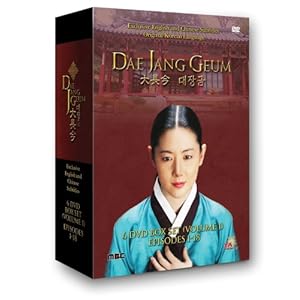
As president of the Institute of Korean Royal Cuisine, Han Bok-Ryeoh was instrumental in the development of the royal court cuisine featured in the popular Korean drama series, Dae Jang Geum ("대장금", 'The Great Jang Geum") or "Jewel in the Palace". Han was directly responsible for the food direction of the show, determining which dishes to feature on an episode after reading the script (Han Bok-Ryeoh, fncast interview). She and her staff at the Institute created the dishes that were seen on that show (Han). Due to the popularity of the series in several Asian countries and Iran, there developed a greater interest in Korean food, starting a boon in the demand for Korean cuisine in places like Hong Kong (The Young Reporter, Dawning Leung Hoi-ching) and Japan (allBusiness, Laura Miller, p. 6). Korean restaurants in these areas enjoyed a greater popularity due to this phenomenon.


"Dae Jang Geum - Vol. 1" DVD (Amazon)
Free streaming at IMDB

To learn more about the food featured in this series, you may refer to the following set of instructional dvd's.


"Royal Court Cuisine from the Kitchen of Jewel in the Palace
with Yang Mikyung" (Korean)
DVD Set via Yes24.

This set features "more than 100 recipes" from the series (Yes24). Hosted by Yang Mi Kyung, the actress who played the mentor to the lead character, Seo Jang Geum, the first female royal physician of the Joseon Dynasty, the recipes have been "adapted for the taste and convenience of the modern viewer" (Yes24).

For more information about Korean royal court cuisine, you may refer to the books published by the Institute of Korean Royal Cuisine or go to their site and Jeonbuk Food Culture Plaza for additional reading. For more images of royal cuisine, you may refer to "궁중요리" by 요리를 배우는 사람들 and Timespace's image gallery. For recipes, you may refer to Daum 미즈쿡's section on 궁중요리. There is also a popular Korean language blog by Calla called 전통떡으로 대박난엄마 that focuses on traditional Korean cuisine with a few recipes on royal cuisine.


친절판 정과 or Hospitality Platter of Jungwa via 전통떡으로 대박난엄마

정과 or jungwa (pronounced 'jung-gwa',
fruits reduced in honey or sugar water)
친절판 ('chin-jeol-pahn', 'hospitality platter')


궁중 떡볶이 or Sauteed Royal Court Rice Cakes via Rimi
(http://www.rimi.kr/905575)
궁중 - Royal Court ; 떡볶이 - Sauteed Rice Cakes


via 사랑언덕

갈비찜 - Braised Beef Ribs


via 추억은 영원히

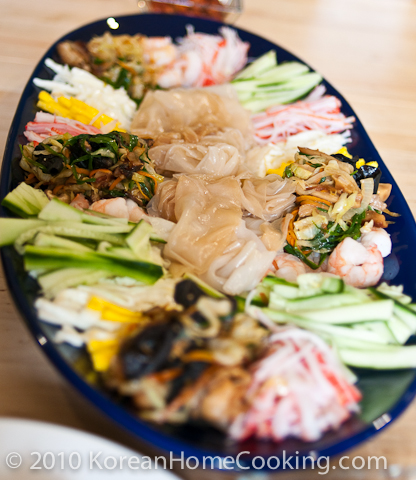
골동면- 'goel-doeng-myeon'


Haepari Naengche or 해파리 냉채 via Epicurious Travels
a modern take on the royal dish


Posted by tastingkorea

Tuesday, November 15, 2011

What is Authentic Korean Cuisine?


The Institute of Royal Korean Cuisine at Changdeokgung Palace


Those of us who grew up in Korean homes have a good idea of homestyle Korean cooking and often other forms like restaurant fare and street food. But what constitutes authentic Korean cuisine? Discerning what is authentic from what is common may be challenging if we have not been exposed to the traditional forms of Korean food. That is not to say that food cannot be authentic if it is not traditional. According to Seoul Eats, the modern form of patbingsu emerged "after the Korean War and during the US occupation" using the "surplus supplies" from the U.S. army base (except for the red beans).

Being exposed to dishes in all their variations helps one determine the common approach to preparing a dish, but it is also important to study the history of Korean cuisine to understand what is truly authentic. Dishes emerge from a certain time and place and the spirit of the people and culture that inhabited that period of history. Modern Korean cuisine is greatly influenced by the culinary traditions of its past, but is a different creation in itself. The use of industrialized ingredients like commercial soy sauce, daenjang (된장, soy bean paste), and gochujang (고추장, red pepper paste) make it more convenient for modern day Koreans to prepare their own food. Of course, there are Koreans that make their own soy sauce and pastes, but preparing Korean food today is a much different endeavor from before the industrial age with the mass production of these essential ingredients. Food, like other products of culture, evolves with the times and the changing mentality of the people.


Dwaenjang or 된장 via Trifood


So what makes a food authentically Korean if the culture that creates it constantly changes? In order to determine that, one needs to look at the time and place from which a food originates as well as its ingredients and method of preparation. In order for a food to be authentic to a specific place, it needs to originate from there. There needs to be confirmation that the dish originated from that place without any foreign influence. This can be done through genuine historical records (written or oral) or artifacts. The combination of ingredients and the full preparation of those ingredients needs to be directly from that area. So kimchi is Korean although it uses a red chili pepper that may have originated elsewhere. The combination of ingredients (cabbage, red pepper flakes, garlic, etc.) and the method of preparation (kimchi fermentation technique) is original to Korea.


Fermented cabbage dishes do exist in other cultures like Germany where sauerkraut is made. Both kimchi and sauerkraut have cabbage as the main ingredient and use fermentation. However, the combination of ingredients used in kimchi is different from the combination used in sauerkraut. Kimchi uses pepper and garlic, etc. Sauerkraut just uses cabbage and salt. Kimchi and sauerkraut both use salt in the fermentation process, but in kimchi, it is necessary to coat individual leaves with a paste unless one chops them before brining. In sauerkraut, the cabbage is shredded, so it is just enough to mix them into the liquid brine to start fermentation.

The individual ingredients or the methods of preparation used in a dish do not have to be unique, but the combination and how that combination is prepared needs to originate directly from a particular place without any foreign influences. That is why one cannot argue that chicken soup is authentic to one specific place as many cultures raise chickens and use them in soup. It did not originate from one specific place. It originated from many places, so one can say that chicken soup is authentic to all of them. But samgyetang (삼계탕), a Korean soup made of stuffed chicken, rice, and ginseng, etc. is definitely unique to Korea in its combination of ingredients and style of preparation, so it is definitely an authentic Korean recipe. Uniqueness to a particular region makes a dish authentic to it. But authenticity is not about uniqueness, but the way a dish is conceived. Did it originate directly from a culture without foreign influence in terms of its combination of ingredients and the total preparation of those ingredients? Then, it is authentic.


Samgyetang or 삼계탕 Recipe from Top Chef Korea


Can fusion dishes be considered authentic? I suppose one could say that they are authentic to the influences that created them. For example, yakiniku. This is a Korean Japanese version of Korean bbq (Korean-style grilled meats). Is yakiniku Korean? It has a lot of Korean influences and is pretty close to Korean bbq in terms of its ingredients and preparation. However, one cannot deny that there is a slight Japanese influence in its sauce and cut of meat. It is not an authentic Korean or Japanese dish, but a largely Korean dish with Japanese flourishes. Just like mapa dubu is a largely Chinese dish with Korean flourishes. To be authentic to a region, a dish must be authentic in terms of its combination of ingredients and total preparation of those ingredients.

To get a better idea of what is truly authentic to Korean cuisine, you can read the series of articles on "Traditional Korean Food Culture" presented by the Institute of Korean Royal Cuisine. I have also written a post, Learning More About the History of Korean Food on the Web, as well as Great Blogs to Teach You About the Culture/Background of Korean Food to highlight some online resources to learn more about the background of Korean food. I have shared offline resources as well in my post Great Books to Learn More About Korean Food Culture.


Posted by tastingkorea

Thursday, November 10, 2011

Koreans Love to Mix It Up


One distinct quality of Korean food is the number of dishes that involve mixing and stirring. You can see this in dishes like bibimbap (비빔밥, 'mixed rice'), bibim mandu (비빔만두, 'mixed dumplings'), and bibim guksu (비빔국수, 'mixed noodles') as well as deopbap (덮밥, 'covered rice') dishes and desserts like patbingsu. Korea is a food culture that loves to mix and stir things up. In fact, bibimbap was once called 골동반 (pronounced 'gohldoengbahn'), represented as 骨同飯 in hanja (Sino-Korean characters), containing the meaning 'to mix in a jumble' according to professor Choi Joon-Shik. The point of mixing it up is to meld the flavors of each ingredient so that the resulting dish brings out the combined and individual flavors of each ingredient (Choi). There is something about this fusion that manifests the collective psyche of Koreans in such a magnificent way. Each ingredient is added for the unique contribution it brings to the flavor of the dish, but then, all ingredients are combined to bring out the collective flavor of the whole (Choi), a wonderful mishmash of different textures and flavors. This fusion of diverse ingredients creates a dynamism that cannot be achieved by individual ingredients alone. It is this complexity of textures and flavors that creates the richness and depth that stimulate and tantalize the tastebuds. It is through this potpourri that one can see the rich and dynamic spirit of Korean people and culture, the sense of oneness or uri (우리, 'us') mentality that is characteristic of the people and the passion that can be seen in many Koreans, our movies, and our dramas. Koreans really love a deep and hearty flavor known as 고소한 맛 (pronounced 'gosohahn maht') and bibim dishes do an excellent job of bringing that out.

Here are some wonderful examples of the mixing that Korean dishes are known for:


Bibim Naengmyeon or 비빔냉면 via 무지개의 달콤한 세상


Bibim Guksu or 비빔국수 via Beyond Kimchee


via One Fork, One Spoon


Bibimbap or 비빔밥 via Eating and Living


(Nalchi Ahl - 'flying fish roe' ; Hwe - 'raw fish')


Posted by tastingkorea

Related Posts Plugin for WordPress, Blogger...