Showing posts with label snacks. Show all posts

Sunday, May 6, 2012

Making Tteokpokki from Scratch

Here are some ingredient recipes if you would like to make tteokpokki from scratch:


The simplest recipe for making tteokbokki tteok from scratch
If you prefer sleek cylinders, you may shape your dough using cannoli 
or other tube molds and cut the dough to your desired length. 

Anchovy-Dashima Stock via cHow Divine

For flat fish cakes, you may try slightly baking or frying the mixture after rolling it into a flat sheet to get a solid texture before cooking in tteokpokki sauce. 


Here are some additional recipes for making tteokbokki:


Two chefs present Goongjoong (Royal Court) and Spicy Tteokpokki 

with a little background information about tteok and the dishes presented
The Goongjoong Tteokpokki has beef, eggs, and assorted vegetables.
The spicy version has boiled eggs and fish cakes.


Kochujang Tteokpokki with Fish Cakes via KFoodAddict (written recipe)
Adding cheese for a fusion option


For more tteokpokki recipes and a background on the dish, you may refer to the post Tteokpokki (Revised May 8, 2012).

Posted by tastingkorea

Thursday, March 29, 2012

Tteokpokki

Tteokpokki (떡볶이) refers to little rice cakes sauteed in a kochujang (red pepper paste) or soy sauce-based sauce, or other kinds like seafood, jahpchae, beef, or fusion sauces like curry, cheese, jjajang (자장, black bean sauce), etc. The rice cakes, called 떡 ('tteok') in Korean, are shaped in the form of little cylinders the size of one's index finger, tteokpokki tteok, or much bigger in the form of jumbo rolls with the diameter of a quarter, garaetteok (가래떡). They can also take the form of ovalettes a few mm in thickness, tteokguek tteok, but this is not a traditional ingredient for tteokbokki. '볶이' means 'sautee' and thus tteokpokki refers to 'sauteed rice cakes'.


Topokki JJang 
an iPad app that features 
32 tteokpokki recipes


More tteokpokki recipes from Topokki Research Institute


An excellent overview of several basic types of tteokpokki


Tteokpokki originated from the Korean royal court where it was referred to as '떡찜' ('Steamed Tteok'), '떡잡채' ('Tteok Jahpchae', sauteed tteok with assorted vegetables and beef), '떡전골' ('Tteok Jeongol', tteok hotpot), etc. (Assorted faculty and students from the Traditional Food Culture Dept. of Sookmyung University and its Korean Food Research Center). The royal version of tteokpokki, which we now know as 'Goongjoong Tteokpokki', was a special treat for royals. According to Sookmyung University, one version was made of white tteok, rib meat (sirloin), sesame oil, soy sauce, green onions, etc. according to the late 18th century cookbook 시의전서 (Nate 백과사전). Goongjoong Tteokpokki was the original form of tteokpokki as well as the first version of 간장 떡볶이 ('Gahnjang Tteokpokki', Soy Sauce Tteokpokki). 

The name '떡볶이' ('tteokpokki') was first featured in print in the 1942 cookbook "조선요리제법" ('Joseon Cooking Methods') (Sookmyung). The modern version of tteokpokki was established sometime after 1950 with Kochujang Tteokpokki (고추장 떡볶이) ("길거리 음식의 140억 투입 . . . 한식 세계화의 첨병으로", JoongAng Sunday, Suh Kyung-Ho). The exact timeline for the popular transition from soy sauce to kochujang tteokpokki is not clear, but this was the time when tteokpokki became a mainstream dish from the exclusive treat that it once was for the aristocrats and royalty (Suh). The noble class did not prepare tteokpokki in such a spicy manner, but used soy sauce as a flavor base. The introduction of kochujang was an adaptation made when tteokpokki became a mainstream dish. 

For a more extensive summary of how tteokpokki evolved, you may refer to the sources cited as well as these articles:


an excellent introduction to the history of tteokpokki 


A Brief Timeline of How Tteokpokki Evolved via Topokki Research Institute


The really cheap version of tteokpokki is made up of just sauce and rice cakes. But more standard variations include vegetables, beef, boiled eggs, fishcakes, and/or seafood. Ramen noodles may also be added as an additional treat, turning it into rappokki (라볶이). The key to making delicious tteokpokki is to use cakes that are freshly made of 100% rice in addition to using a delicious broth to flavor the sauce. Cakes that contain white flour do not taste as fresh or light as pure rice cakes. I prefer using ovalettes when rice cakes are called for in a recipe as they are thinner and lighter than the more commonly used cylinders. If you are marinading or thawing rice cakes, do not soak them too long or they will get too soft. I prefer to get the most most flavor per piece so use thinner versions of tteokpokki tteok. I add a seaweed and anchovy broth made of dashima (thick and flat dried kelp) to my tteokpokki sauce to give it a more savory flavor in addition to the carrots, squash, and beef that I use. Other broths may include seafood, beef, and/or vegetables, depending on the version of tteokpokki one is making. I prefer a slight sweetness to my tteokpokki sauce, so add additional sugar if necessary. 


An introduction to Royal Tteokpokki and a parody via Korean Food Festival
the most traditional version of tteokpokki


Royal or Gungjung Tteokpokki (궁중떡볶이)
via Institute of Korean Royal Cuisine


A modern take on the royal dish via Storycook124


궁중떡볶이 via Naver Kitchen (Korean)
Royal Tteokpokki adapted for the home cook


the most popular version of tteokpokki


해물떡볶이 ('Haemool Tteokpokki') or Seafood Tteokpokki via theboni
a popular variation on the spicy standard

해물떡볶이 via Naver Kitchen 


라볶이 or Rappokki via Seoul Taste
Tteokpokki with Ramen Noodles

라볶이 via 황금연못


잡채 떡볶이 or Jahpchae Tteokpokki via Samna


불고기 야채 떡볶이 or Bulgogi Vegetable Tteokpokki via Bravo My Life


카레 떡볶이 or Curry Tteokpokki via 아송
(카레 - curry, pronounced 'karae' in Korean)
Indian, Japanese, and Korean fusion dish


자장 떡볶이 or Jjajang Tteokpokki via Life is Cooking
Chinese Korean fusion dish


치즈 떡볶이 or Cheese Tteokpokki via theboni
American Korean fusion dish


Posted by tastingkorea

Monday, November 28, 2011

Royal Court Cuisine


Gujeolpan (구절판), front, and Shinseonllo (신선로), back


Royal court cuisine (궁중 음식, 'goongjoong eumshik') is the most developed form of traditional Korean cuisine and has had a lot of influence on Korean food today (Korean Cultural Heritage Administration). Royal court cuisine refers to the food eaten by Korean royalty primarily during the Joseon Dynasty (1392-1910). This cuisine certainly existed before, but records of royal cuisine from earlier dynasties were more vague, noting the large number of dishes without being too specific about their names (Institute of Korean Royal Cuisine). Of course, the cuisine evolved significantly throughout this period of more than 500 years (Jeonbuk Food Culture Plaza). Royal court cuisine of the Joseon Dynasty tends to be more subtly seasoned, "less salty and spicy, than food of the previous dynasties and the food we eat today" (Korean Cultural Heritage Administration). It requires more elaborate preparation than the traditional Korean food we normally eat. There were many servants employed in the creation of the royal table ("Who Made Royal Cuisines?", Institute of Korean Royal Cuisine). As the food was prepared for Korean royalty and their guests, there was much greater effort in presenting meals in terms of the styling of individual dishes, table setting, etc. The king had access to all the food available within Korea through his position and resources, so there was an abundance of dishes presented at each meal ( "The King's Table", EBS Channel).


Royal cuisine can be divided into several categories*:

1. Daily meals (일상식, 'eil-sahng-shik')

2. Meals for receiving guests (영접식, 'young-juhp-shik')

3. Food for memorial ceremonies (제례식, 'jeh-ryeh-shik')

4. Food for official ceremonies of the court like weddings, ascensions to the throne, and promotions of its members (가례식, 'gah-rye-shik')

5. Feasts for receiving foreign dignitaries (연향식, 'yuhn-hyang-shik').

*Translation of categories provided by Tasting Korea


Daily meals were prepared for the king and his family. The king's meal is referred to as the 'sura' (수라) and a table set with sura is known as the 'surasang' (수라상) (Institute of Royal Korean Cuisine). According to the Institute, "Members of royal families did not share a table. Should there be two people dining together, they were served at separate tables and sat side by side. Three tables were prepared for each person: wonban, sowanban and chaeksangban.


At a meal prepared for a king, twelve different side dishes were served. However, the number of dishes actually placed on a table was much more. Additional dishes included two types of cooked rice (plain rice and rice mixed with red beans), two types of soups, three types of kimchi (cabbage kimchi, kkakdugi and water kimchi), two types of stew (bean paste stew and salted fish stew), three types of jang (soy sauce, seasoned soy sauce and seasoned chili paste) and one steamed dish. In principle, the ingredients and cooking methods should not overlap among dishes prepared for surasang.


The twelve side dishes, served on small plates, consisted of nine different dishes (cooked vegetables, fresh vegetables, chilled roasted meat or fish, boiled-down food, pickled vegetables, dried meat or fish, salted fish, pan-fried vegetables, and slices of boiled beef) and three special side dishes (poached eggs, sashimi, and warm roasted meat or fish). The surasang of today has been handed down orally by royal servants and royal descendents of the late Joseon Dynasty; therefore, it may not be representative of the entire Joseon Period. Literature on daily foods enjoyed in the royal court is much more scarce than that on banquet foods. The only literature that elaborates on royal daily foods is Wonhangeulmyojeongriuigwe (a record of protocols) (1795). According to its records, there were meals prepared with only seven or ten side dishes."

According to the Institute of Korean Royal Cuisine, court ladies or goongnyeo (궁녀) were assigned the task of preparing the surasang (수라상) for regular meals ("Who Made Royal Cuisines?"). There was a "hierarchy of court ladies", ranked on age and experience, from the four year old na-in (나인) to a fifth-level sangung (상궁) (Institute). "For royal banquets, male chefs called daeryeong suksu [대령숙수] prepared the meals at sukseolso [숙설소], a kitchen built in a temporary house (Institute)." Due to the physical demands of the job such as "butchering an ox and boiling it in an enormous pot", men were deemed more suitable for the task and assigned to this job (Institute).


Two na-in, Jang Geum and Geum Young, setting the surasang for a feast


a brief history of the meals eaten by the kings of Joseon Dynasty and their preparation


Introduces Korean royal cuisine and the restaurant Pilkyungjae (필경제), a restaurant housed in a traditional home of the Joseon Dynasty, the home of descendants of King Sejong, the inventor of the Korean language. Lee Byung Mu, a descendant of the king, decided to open this restaurant to share the tradition of Korean royal cuisine with the rest of the world. Features sinseonllo (신선로), a hot pot made of meatballs and a variety of vegetables and gujeolpan (구절판, 'gue-jeol-pahn'), a dish with assorted sliced meats and vegetables served with thin wheat wraps.


Introduces "Goongyeon" (궁연), a restaurant that tries to "modernize royal banquet dishes while adhering to tradition." Features house dishes like saseul juk (kebabs made of bass fillets and ground beef), ginseng fries wrapped in dates (대추말이 수담튀김, 'daechumari suedahm tiigim'), daeha jjim (대하찜, a prawn salad made of pine nuts, chestnuts, cucumbers, and other vegetables with a mustard sauce). Describes the essence of Korean royal cuisine.


(2011 Presentation - Institute of Korean Royal Cuisine)

Introduces the purveyor of royal court cuisine to modern day Koreans, Han Bok-Ryeoh, and honors her and the work she has done to spread greater awareness of the cuisine to the Korean public. Reveals how the tradition was transmitted through the generations from a veteran court lady of the last king and finally to Han. Illustrates the beauty and majesty of royal court cuisine


(2011 Presentation - Institute of Korean Royal Cuisine)

Han explains how this cuisine became designated as an important intangible cultural heritage. This video goes into greater detail about how it was passed down from person to person. The food set in front of the guest conveyed his social standing and position. Royal court cuisine is the true heart of Korean cuisine. Highlights the spirit of this tradition, the course of meals presented to the king throughout the day, and the ceremonies held at the palace.


Preparation of the Surasang (Dae Jang Geum)

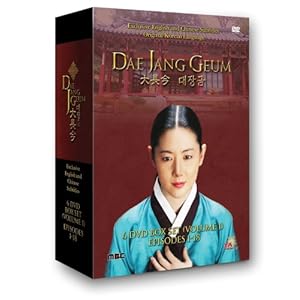
As president of the Institute of Korean Royal Cuisine, Han Bok-Ryeoh was instrumental in the development of the royal court cuisine featured in the popular Korean drama series, Dae Jang Geum ("대장금", 'The Great Jang Geum") or "Jewel in the Palace". Han was directly responsible for the food direction of the show, determining which dishes to feature on an episode after reading the script (Han Bok-Ryeoh, fncast interview). She and her staff at the Institute created the dishes that were seen on that show (Han). Due to the popularity of the series in several Asian countries and Iran, there developed a greater interest in Korean food, starting a boon in the demand for Korean cuisine in places like Hong Kong (The Young Reporter, Dawning Leung Hoi-ching) and Japan (allBusiness, Laura Miller, p. 6). Korean restaurants in these areas enjoyed a greater popularity due to this phenomenon.


"Dae Jang Geum - Vol. 1" DVD (Amazon)
Free streaming at IMDB

To learn more about the food featured in this series, you may refer to the following set of instructional dvd's.


"Royal Court Cuisine from the Kitchen of Jewel in the Palace
with Yang Mikyung" (Korean)
DVD Set via Yes24.

This set features "more than 100 recipes" from the series (Yes24). Hosted by Yang Mi Kyung, the actress who played the mentor to the lead character, Seo Jang Geum, the first female royal physician of the Joseon Dynasty, the recipes have been "adapted for the taste and convenience of the modern viewer" (Yes24).

For more information about Korean royal court cuisine, you may refer to the books published by the Institute of Korean Royal Cuisine or go to their site and Jeonbuk Food Culture Plaza for additional reading. For more images of royal cuisine, you may refer to "궁중요리" by 요리를 배우는 사람들 and Timespace's image gallery. For recipes, you may refer to Daum 미즈쿡's section on 궁중요리. There is also a popular Korean language blog by Calla called 전통떡으로 대박난엄마 that focuses on traditional Korean cuisine with a few recipes on royal cuisine.


친절판 정과 or Hospitality Platter of Jungwa via 전통떡으로 대박난엄마

정과 or jungwa (pronounced 'jung-gwa',
fruits reduced in honey or sugar water)
친절판 ('chin-jeol-pahn', 'hospitality platter')


궁중 떡볶이 or Sauteed Royal Court Rice Cakes via Rimi
(http://www.rimi.kr/905575)
궁중 - Royal Court ; 떡볶이 - Sauteed Rice Cakes


via 사랑언덕

갈비찜 - Braised Beef Ribs


via 추억은 영원히

골동면- 'goel-doeng-myeon'


Haepari Naengche or 해파리 냉채 via Epicurious Travels
a modern take on the royal dish


Posted by tastingkorea
Related Posts Plugin for WordPress, Blogger...